

Challenging Field Sobriety Tests in DWI Cases
Dec. 1, 2025
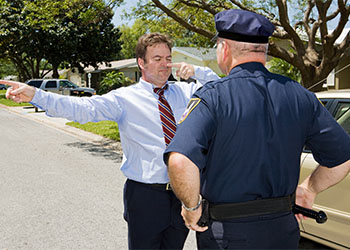 Field sobriety tests were standardized by the National Highway Traffic Safety Administration (NHTSA) to help officers determine whether a driver is intoxicated. The three most commonly used tests are the Horizontal Gaze Nystagmus (HGN), Walk-and-Turn, and One-Leg Stand.
Officers are trained to observe how a person performs on these exercises to decide whether to arrest them for DWI. However, under criminal defense principles, these tests aren’t definitive proof of intoxication. They serve as indicators, and their accuracy depends heavily on how the officer administers them.
Even the NHTSA admits that these tests aren’t 100% reliable. There are many DWI cases where the officer’s interpretation of a driver’s performance is subjective, leading to false assumptions about impairment. Understanding how to challenge field sobriety tests is a critical part of protecting a person’s rights under Texas law.
The professionals at The Law Office of Aaron Fonseca in McAllen, Texas, know that these tests are far from perfect. The firm is here to provide legal support to individuals in McAllen, Edinburg, Mission, and the Rio Grande Valley who have been accused of DWI. Reach out today for more information or to schedule a consultation.
Why Field Sobriety Tests Are Often Unreliable
In criminal defense cases, one of the first issues attorneys examine is how the officer conducted the field sobriety tests. For these tests to hold any weight, they must be performed according to precise guidelines.
Yet, in real-life settings, these standards are often not followed. Officers sometimes rush through the instructions, perform the tests on uneven ground, or fail to account for environmental distractions. For example, the HGN test measures involuntary jerking of the eyes that can occur when someone is intoxicated. But many other conditions — such as fatigue, allergies, or certain medications — can also cause this reaction. The Walk-and-Turn and One-Leg
Standing requires balance and coordination, but factors like footwear, surface conditions, and even nervousness can affect performance. In criminal defense practice, these details matter because they can show that what the officer perceived as “signs of impairment” were actually innocent explanations.
Subjectivity and Officer Bias
A major problem with field sobriety testing is that it depends almost entirely on the officer’s observations. Unlike chemical tests, which produce measurable results, these exercises rely on an officer’s judgment.
Once an officer suspects someone of intoxication, they may interpret every movement or hesitation as further evidence of guilt. This bias can color their report and later testimony, making the test results seem more incriminating than they genuinely are.
Body camera footage often reveals a different story. Recordings may show that an individual performed the tests calmly and appeared steady, even though the officer claimed otherwise. In these cases, the subjective nature of the evaluation becomes apparent, and challenging that subjectivity can be a powerful criminal defense strategy.
The Legal Standards for Probable Cause
Under Texas law, officers must have probable cause to arrest someone for DWI. Field sobriety tests are one way they try to establish that probable cause, but if the tests were flawed or improperly conducted, the arrest itself may not be valid.
In criminal defense cases, this can be a critical issue. If an attorney can show that the officer lacked sufficient grounds for the arrest, any evidence gathered afterward — such as breath or blood tests — could be suppressed in court.
This legal standard is an essential safeguard against law enforcement overreach. Probable cause can’t rest solely on faulty field tests or vague observations like “the driver appeared nervous” or “had glassy eyes.” Everyone reacts differently to police interactions, and nervousness is hardly proof.
Factors That Affect Field Sobriety Test Performance
Many factors can affect how a person performs on a field sobriety test. These factors have nothing to do with alcohol and can significantly influence the outcome. Here are some of the most common issues that can arise during these tests:
Physical limitations or medical conditions: Problems with the inner ear, back, knees, or legs can affect balance.
Environmental conditions: Uneven surfaces, poor lighting, or high winds can make physical tests difficult.
Age and weight: Older individuals or those with certain body types may find it harder to perform balance-based exercises.
Footwear and clothing: High heels, boots, or restrictive clothing can interfere with balance and movement.
Psychological stress: Being pulled over and questioned by police can cause anxiety, leading to mistakes unrelated to alcohol.
The Law Office of Aaron Fonseca focuses on identifying these factors and presenting them as evidence that the test results weren’t reliable indicators of intoxication.
Challenging the Officer’s Training and Procedures
Another crucial element of challenging field sobriety tests involves the officer’s training and adherence to procedures. Under criminal defense law, an officer’s qualifications and methods are fair game for scrutiny. If the officer wasn’t adequately trained or failed to follow standardized NHTSA protocols, the test results can lose credibility.
In some cases, officers skip important steps or misinterpret results because they haven’t refreshed their training in years. Attorneys will often request records of the officer’s certification and field experience as part of the discovery process. If the officer’s training was outdated or insufficient, that fact can weaken the prosecution’s argument.
Using Video Evidence to Strengthen a Defense
Video footage has become one of the most effective tools in criminal defense. Police dashcams and body cameras can provide an objective record of what actually happened during a traffic stop. I’ve found that these videos often contradict the officer’s written report.
For instance, a report might claim that the driver “staggered” or “used arms for balance,” yet the video shows a person standing still and following directions carefully. These discrepancies can be pivotal in convincing a judge or jury that the field sobriety tests weren’t credible. By highlighting the difference between what is alleged and what is visible, an experienced criminal defense attorney can create reasonable doubt about the state’s evidence.
Field Sobriety Tests Aren’t Mandatory
Many people don’t realize that, in Texas, field sobriety tests are voluntary. Officers rarely make that clear during a stop, but drivers have the right to refuse them. While refusing may lead to other consequences, such as a license suspension, it can prevent the officer from collecting potentially misleading evidence.
It’s common for people to feel pressured into taking these tests because they believe they have no choice. It’s important to remember that field tests are just one tool officers use, and they’re not required by law.
Suppressing Faulty Evidence in Court
When field sobriety tests are conducted improperly, the next step in a criminal defense strategy is to challenge their admissibility. This is often done through a motion to suppress. If successful, the court may exclude the test results entirely from evidence. Without that evidence, the prosecution’s case can weaken dramatically.
To argue for suppression, attorneys typically focus on procedural errors, constitutional violations, and inconsistencies between the officer’s report and objective evidence. Each of these issues can demonstrate that the evidence was obtained unlawfully or is insufficiently reliable.
Building a Strong Defense Strategy
Every DWI case is unique, but the foundation of an effective criminal defense lies in careful investigation and preparation. The Law Office of Aaron Fonseca takes a detailed approach to every case by:
Reviewing dashcam and body camera footage.
Examining officer training and certification records.
Identifying environmental or medical conditions that could affect test results.
Challenging the legality of the stop and arrest.
Questioning the credibility of the prosecution’s witnesses.
By addressing these issues, the firm works to uncover weaknesses in the prosecution’s case and create reasonable doubt about the charges. Speak with a trusted criminal defense attorney to learn more.
Compassionate Legal Guidance
Field sobriety tests may seem convincing on the surface. However, officers make mistakes, conditions are rarely ideal, and human bias can influence how test results are interpreted. The law allows for these tests to be challenged — and when they are, it often reveals just how shaky the prosecution’s case really is.
The Law Office of Aaron Fonseca approaches every DWI case with the belief that every client deserves a fair defense. With careful attention to detail and a thorough understanding of criminal defense law, the firm works to protect the rights of those accused and help them move forward with their lives. The Law Office of Aaron Fonseca is proud to serve clients in McAllen, Edinburg, Mission, and the Rio Grande Valley. Call today.